

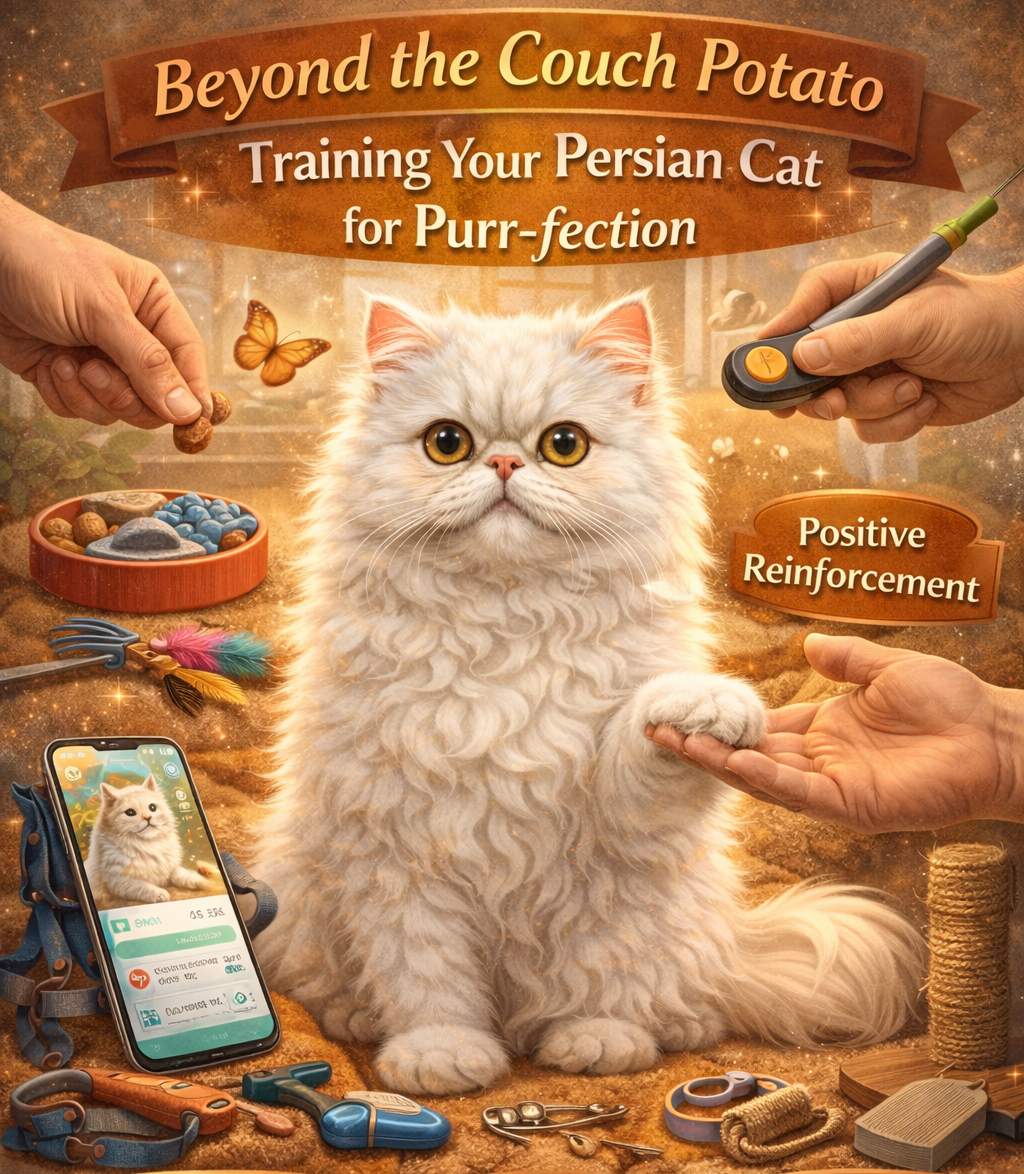
Discover how to train your Persian cat effectively! Learn gentle techniques, essential tools, and solve common behavioral challenges for a purr-fectly behaved feline companion.
The Unique Temperament of Persian Cats
Many imagine Persian cats as regal, serene creatures, often content with luxurious naps. While they certainly embody elegance and a love for comfort, the idea that they are merely decorative “couch potatoes” is far from the truth. Just like any intelligent animal, these magnificent felines thrive on engagement and mental stimulation, making effective Persian training not just possible but crucial for their well-being and a harmonious household.
Persian cats are renowned for their docile, sweet, and calm nature, making them excellent indoor companions. They typically enjoy a peaceful environment and appreciate routine. However, their intelligence should never be underestimated, nor their capacity for learning and forming deep bonds with their human companions.
Understanding their unique personality is the foundational step in successful Persian training. Unlike some more boisterous or independent breeds, Persians respond best to gentle, consistent methods rooted firmly in positive reinforcement. Harsh corrections or impatient approaches can easily make them withdrawn, fearful, or even resistant to future training attempts.
Patience and Positive Reinforcement are Key
Your Persian cat values routine, stability, and a sense of security in their environment. Sudden changes, inconsistent expectations, or a chaotic atmosphere can be deeply unsettling for them. Therefore, patience is an absolute paramount virtue in any Persian training regimen you undertake.
Positive reinforcement is the cornerstone of effective feline training. This involves immediately rewarding desired behaviors with high-value treats, genuine praise, gentle petting, or favorite toys. This strategy reinforces the good behavior, making your cat more likely to repeat it in the future, while simultaneously building trust and strengthening your bond.
It is crucial to avoid punishment, scolding, or any form of negative reinforcement. Such methods do not teach your cat what you want them to do; instead, they foster fear, anxiety, and can lead to a breakdown in trust, potentially resulting in more complex behavioral problems. A stressed or fearful cat is inherently less receptive to learning and cooperation.
Laying the Foundation: Essential Persian Training
Effective Persian training truly begins with establishing foundational behaviors that are vital for your cat’s safety, health, and seamless integration into your home environment. These core areas include litter box mastery, cooperation with grooming, and early, gentle socialization.
Litter Box Perfection
Most cats possess a natural inclination to use a litter box, but Persian cats have specific considerations that can optimize their success. Their luxurious long fur can sometimes track litter around the house or become soiled, necessitating careful attention to box selection and maintenance. This is a key part of early Persian training.
Always choose a large, uncovered litter box that is easy for your cat to enter and exit comfortably. Scoop the box daily to maintain cleanliness, and change the litter completely at least once a week, washing the box thoroughly. Many Persians show a strong preference for fine-grained, unscented litter, as strong scents can be off-putting.
If your Persian is having accidents outside the box, systematically consider potential factors. Is the box in a private, accessible location? Is the litter type appealing? Do you need multiple boxes in a multi-level home or for multiple cats? Always schedule a vet visit to rule out any underlying medical issues that could be causing inappropriate elimination.
Grooming: A Non-Negotiable Training Goal
Due to their magnificent, long, and dense coats, grooming is arguably the most critical aspect of Persian cat care and a significant area for dedicated Persian training. Regular, consistent brushing is essential to prevent painful mats and tangles, and to keep their delicate skin healthy and free from irritation.
Start grooming training early, ideally when your Persian is a playful kitten. Make every grooming session a positive and calm experience, pairing it with delicious treats and gentle handling. Gradually introduce various grooming tools such as soft brushes, wide-toothed combs, and even nail clippers, allowing your cat to investigate them before use.
Aim for daily brushing sessions, even if they are short, five-minute intervals. Establishing this routine not only keeps their coat pristine but also allows you to regularly check for any skin issues, parasites, or lumps. Consistent grooming dramatically reduces the risk of severe, painful mats that often require professional intervention and can be traumatic for your cat.
Socialization and Handling
Exposing your Persian to a variety of new sights, sounds, and gentle handling experiences from a young age is vitally important. This process helps them develop into well-adjusted, confident adults who are comfortable with new experiences, people, and other pets, minimizing potential anxieties.
Actively encourage gentle, supervised play with family members, thoughtfully introduce them to respectful visitors, and accustom them to being picked up and held securely. It is paramount that all these interactions are positive, brief initially, and entirely stress-free for your cat, always respecting their boundaries.
A well-socialized Persian is typically more confident, resilient, and significantly less prone to developing fear-based or aggressive behaviors. This proactive approach makes future training endeavors, whether for vet visits or learning new tricks, much smoother and more enjoyable for everyone involved.
Advancing Your Persian’s Skills: Beyond Basics
Once your Persian has confidently mastered the foundational behaviors, you can excitingly move on to more advanced Persian training. This includes activities such as leash walking, teaching fun tricks, and implementing enriched playtime strategies. These activities provide essential mental stimulation and physical exercise, which are both crucial components for a happy, healthy, and engaged cat.
Leash Training for Safe Exploration
While not every cat will embrace leash walks, many Persians can be patiently trained to tolerate, and even genuinely enjoy, short supervised outdoor excursions. This offers a wonderful form of safe enrichment and a refreshing change of scenery, stimulating their senses in new ways.
Begin by introducing a comfortable, escape-proof harness (never just a collar, which can injure their delicate throats). Let your cat wear it indoors for very short periods, always pairing the experience with high-value treats and praise. Once your cat is completely comfortable with the harness, attach a lightweight leash and allow them to drag it around the house under supervision.
Gradually progress to short walks indoors, allowing your cat to lead the way and explore at their own pace. Then, move to a very quiet, secure outdoor area for brief periods. Always ensure your cat feels safe and secure, and never, ever force them. The ultimate goal is to create positive associations with the harness and leash.
Teaching Tricks and Commands
Despite their calm demeanor, Persians are surprisingly intelligent and highly capable of learning a variety of tricks and commands. Simple cues like “sit,” “stay,” “come,” or even playful high-fives can be effectively taught using clicker training and consistent positive reinforcement.
Clicker training is particularly effective because the distinct “click” sound provides an immediate, clear marker for the exact desired behavior at the moment it occurs, promptly followed by a reward. Keep training sessions short, generally no more than 5-10 minutes, making them fun and engaging, and always end on a high, positive note.
Consistency in practice is paramount. Regularly practice these behaviors in different environments to help your cat generalize the learned command, meaning they understand it regardless of where they are. These structured training sessions not only teach valuable skills but also provide excellent mental enrichment, preventing boredom.
Enrichment and Playtime Strategies
Even if your Persian is content being a cherished “lap cat,” they still possess natural feline instincts and require regular, interactive play to fulfill their predatory drives and maintain physical activity. Interactive toys that realistically mimic prey, challenging puzzle feeders, and robust climbing structures are all excellent investments.
Dedicate at least two 15-minute interactive play sessions daily with your Persian. This helps them burn off excess energy, prevents boredom-induced destructive behaviors, and strengthens your bond. Rotating their toys frequently keeps their interest piqued and prevents them from getting bored with the same items.
Consider enriching their environment with cat trees, secure window perches offering views of the outdoors, and safe outdoor enclosures (catios). Providing vertical space and varied sensory experiences significantly enhances their overall quality of life and reduces the likelihood of behavioral issues.
Tackling Common Behavioral Challenges with Persian Training
Even the most pampered and well-behaved Persian cat can occasionally develop behavioral quirks or challenges. Addressing these issues early, with patience, and a consistent approach is absolutely vital. Many common problems can be successfully resolved through targeted Persian training techniques and thoughtful environmental adjustments.
Solving Destructive Scratching
Scratching is a natural, instinctual cat behavior, essential for stretching muscles, marking territory, and maintaining claw health. The key is to redirect this behavior appropriately. Provide multiple scratching posts and pads made from various materials (sisal rope, cardboard, carpet remnants) and in different orientations (vertical posts, horizontal pads) to discover your cat’s preference.
Strategically place scratching posts in prominent areas where your cat typically likes to scratch, such as near furniture they’ve targeted. Entice them to use the posts with catnip sprays or by dangling their favorite toys around the post. If you catch them scratching furniture, gently redirect them to a nearby post and generously reward them for using it.
Regular nail trims are also highly effective in reducing the potential damage caused by scratching. This doesn’t stop the behavior but minimizes its impact on your furnishings.
Addressing Excessive Vocalization
While Persians are not typically known for being highly vocal cats, excessive meowing or purring can signal a variety of underlying issues. These might include hunger, boredom, a strong desire for attention, discomfort, pain, or even stress and anxiety.
The first crucial step is always to rule out any medical causes by scheduling a comprehensive vet visit. Once health issues are excluded, try to identify the specific trigger for the vocalization. If it’s attention-seeking, practice ignoring the meows until your cat is quiet, then reward their silence. Ensure they receive ample interactive playtime and mental stimulation throughout the day.
It is vital never to inadvertently reward incessant meowing or unwanted vocalizations with immediate attention or treats, as this will only reinforce the very behavior you wish to extinguish. Consistency from all household members is key.
Preventing Food-Related Issues
Persians, like many pedigree breeds, can be prone to certain health issues, including obesity, if their diet isn’t carefully managed. Free-feeding, where food is left out all day, often leads to overeating and weight gain, which can exacerbate other health conditions.
Implement scheduled meal times with carefully measured portions according to your veterinarian’s recommendations. Utilize puzzle feeders to slow down eating, making mealtime a more engaging and mentally stimulating activity. These can also help prevent gulping food too quickly.
Consult your vet for appropriate diet recommendations, especially for Persians with their characteristic flattened faces, who might struggle with certain bowl types. Special bowls designed for brachycephalic breeds can make eating more comfortable and reduce mess.
Tools and Gadgets for Effective Persian Training
In today’s world, modern technology and thoughtfully designed tools can significantly enhance your Persian training efforts, making the entire process smoother, more efficient, and more enjoyable for both you and your cherished cat. These aids can support positive reinforcement and help manage various behavioral aspects effectively.
Comparison of Top Training Aids
Investing in the right tools can make all the difference in achieving your Persian training goals and ensuring a harmonious household. From interactive feeders that manage meal portions to smart cameras that allow remote interaction, these aids are invaluable in supporting positive behavioral development and management.
| Product | Price | Pros | Cons | Best For |
|---|---|---|---|---|
| PetSafe Smart Feed Automatic Cat Feeder | $150 | Automated portion control, scheduled meals, Wi-Fi connectivity via app | Can be complex to set up initially, requires battery backup during power outages | Regulating meal times, managing weight, and preventing overeating for consistent Persian training |
| Clicker Training Kit with Target Stick | $15-$30 | Highly effective for teaching tricks and commands, provides clear communication, strengthens bond | Requires owner consistency and active engagement, not fully automated | Teaching advanced tricks, specific behaviors, and reinforcing good habits |
| Litter-Robot 4 Automatic Self-Cleaning Litter Box | $700 | Automatic cleaning after each use, superior odor control, health monitoring via app | High initial cost, relatively large footprint, requires specific litter types | Minimizing litter box odors and tracking, ideal for multiple cats, reducing manual scooping |
| Petcube Bites 2 Lite Treat Dispenser & Camera | $199 | Monitor your cat remotely with HD camera, dispense treats, two-way audio for interaction | Requires reliable Wi-Fi connection, treats can occasionally get stuck | Addressing separation anxiety, remote interaction, monitoring behavior while away |
| PetSafe FroliCat BOLT Automatic Laser Pet Toy | $25 | Engaging automatic laser play, promotes active exercise and mental agility | Requires supervision to prevent frustration or overstimulation, uses batteries | Encouraging active play, burning energy, and providing mental stimulation when you’re busy |
Training your Persian cat goes far beyond just basic obedience; it’s about fostering a deep, trusting bond, ensuring their physical and mental well-being, and enriching their lives in meaningful ways. By taking the time to understand their unique temperament, employing consistent positive reinforcement techniques, and wisely utilizing appropriate tools and resources, you can effectively guide your elegant companion towards a life of confidence, contentment, and purr-fection.
Remember, every Persian is an individual with their own personality and learning pace, so patience remains your most valuable asset throughout this journey. Celebrate every small victory, no matter how minor, and maintain consistency in your approach to reinforce desired behaviors. A well-trained Persian isn’t just a happier, more well-adjusted cat; it’s a cherished family member who brings immense joy and significantly fewer behavioral headaches into your home.
Start implementing these comprehensive Persian training strategies today and prepare to witness the incredible and rewarding transformation in your purr-fect companion. The effort you invest now will undoubtedly pay dividends in a lifetime of mutual companionship and understanding.
Want to know more or have specific questions about your feline friend? Reach out to our expert team at Dax AI for personalized advice and support.
Frequently Asked Questions (FAQ)
Can Persian cats be trained like dogs?
While cats, including Persians, learn and interact differently than dogs, they are indeed highly trainable. They respond exceptionally well to positive reinforcement, clicker training, and short, frequent training sessions. They may not perform complex routines on command like some highly trained dogs, but they can certainly learn a wide array of behaviors, from using a litter box perfectly to walking on a leash, coming when called, or performing simple tricks.
At what age should I start Persian training?
The sooner you begin, the better! Ideally, you should start Persian training when your cat is a kitten, generally around 8-12 weeks old. Early socialization, gentle handling, and introducing basic commands or grooming routines at a young age make them significantly more adaptable and less likely to develop undesirable behaviors later on. However, adult Persians are also fully capable of learning new behaviors with consistent patience and diligent positive reinforcement.
Why is grooming training so important for Persians?
Grooming training is absolutely crucial for Persian cats due to their distinctively long, dense, and fine coats. Without regular brushing and grooming, their fur can quickly become matted, leading to severe skin irritation, painful infections, and significant discomfort. Training them to accept and even enjoy grooming sessions from a young age ensures their lifelong health, prevents painful situations that might require sedation, and makes the necessary grooming process much easier and less stressful for both the cat and the owner.
What if my Persian cat is resistant to training?
If your Persian cat appears resistant or uncooperative during training, it’s essential to re-evaluate your approach. Ensure your training sessions are kept short, engaging, highly rewarding, and always conclude on a positive note. Are you using treats that are sufficiently high-value and motivating for your cat? Is the training environment calm and free of distractions? Sometimes, resistance can stem from discomfort, fear, confusion, or a lack of understanding of what’s expected. If issues persist, consider consulting a certified professional cat behaviorist or your veterinarian to rule out any underlying medical conditions that might be impacting their behavior.
Are specific toys better for Persian training?
Absolutely. Interactive toys that realistically mimic prey, such as wand toys with feathers or small plush animals, are excellent for stimulating your Persian’s natural hunting instincts. Puzzle feeders that challenge their minds to work for treats are great for mental engagement. Used responsibly, engaging laser pointers can also encourage active play. These types of toys are not only fun but are also very effective tools for Persian training and enrichment, as they encourage natural behaviors, provide mental stimulation, and can be used as rewards or to direct desired actions during structured training sessions. Additionally, cat trees and various vertical spaces are important for environmental enrichment.
Leave a Reply