

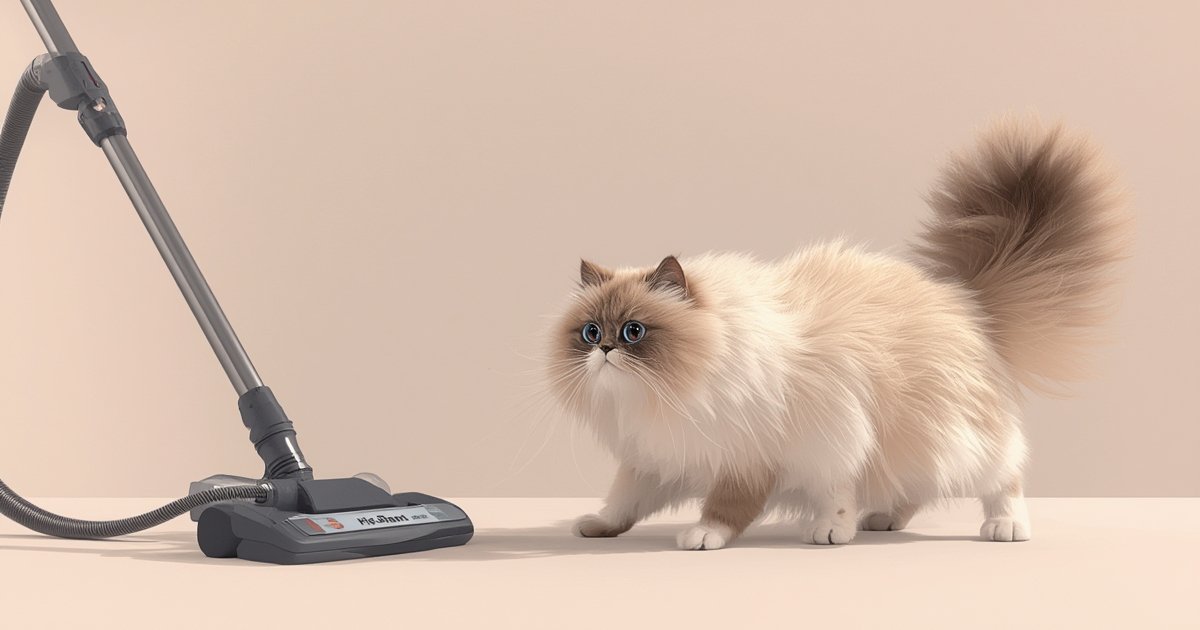
Discover why your Persian cat hisses at the vacuum and get actionable tips to help them overcome fear. Understand common Persian behavior and create a calmer home.
Understanding the Feline Fear Response
The gentle purr and luxurious coat of a Persian cat often belie a sensitive nature, one that can be easily startled by unexpected stimuli. When your fluffy companion suddenly arches its back, flattens its ears, and lets out a startling hiss at the sight or sound of your vacuum cleaner, it’s not simply being dramatic. This is a clear manifestation of a deep-seated fear response, a primal instinct hardwired into all felines.
Cats, even those as domesticated as Persians, retain many of their wild ancestors’ instincts. Their world is perceived through highly attuned senses, making them incredibly aware of changes in their environment. A loud, rumbling machine that moves erratically and emits strange odors can easily trigger their innate fight-or-flight mechanism.
The hiss itself is a warning signal, a clear communication that your cat feels threatened and wants the perceived danger to back off. It’s a plea for space and safety, not an act of defiance. Understanding this fundamental aspect of feline communication is the first step toward helping your Persian cope with its fear.
Common Triggers for Persian Behavior: Why the Vacuum is So Scary
Unraveling why a vacuum cleaner transforms your placid Persian into a hissing furball involves looking at the world through their hyper-perceptive senses. Several factors combine to make this seemingly innocuous household appliance a significant source of distress, influencing common Persian behavior patterns related to fear.
The Loud Noise Factor
Cats possess an auditory range far superior to humans, capable of hearing sounds much higher in frequency and at greater distances. A vacuum cleaner, which typically operates at 70-80 decibels or even higher, creates a jarring, overwhelming din for a cat. This isn’t just an unpleasant noise; it’s a terrifying, alien sound that invades their sensitive hearing, making them feel vulnerable and exposed. The sudden onset and sustained roar are particularly disorienting.
Unpredictable Movement and Size
Imagine a large, noisy monster suddenly appearing in your home, moving in unpredictable patterns. That’s often how a vacuum cleaner is perceived by a cat. Its bulk and erratic movements can be seen as an immediate threat, a direct invasion of their territory. Cats are creatures of routine and control, and a vacuum disrupts both, making them feel cornered or hunted.
The “Predator” Illusion
To a cat, anything large, moving, and making strange noises could be a predator. While we know the vacuum is harmless, your Persian doesn’t. Its shape might even vaguely resemble a large animal, moving purposefully across their personal space. This misidentification of the vacuum as a threat is a key driver of the defensive Persian behavior you observe.
Lack of Control
Cats thrive on a sense of control over their environment. They prefer predictability and the ability to escape or hide when they feel uncomfortable. The vacuum, by its very nature, limits their control. It enters their safe spaces, makes loud noises they cannot stop, and forces them to react. This loss of autonomy is a major stressor for many felines.
Decoding Your Persian’s Hiss: Beyond Just Noise
A hiss is never an isolated event; it’s part of a broader communication package. For your Persian, hissing at the vacuum is a clear signal of distress, fear, or annoyance. Understanding this full spectrum of communication is vital to addressing their anxieties. It’s an important aspect of deciphering Persian behavior when confronted with perceived threats.
The hiss is typically the final warning before a cat might resort to more aggressive actions, such as swatting or biting, if they feel their boundaries are continuously violated. However, before the hiss, cats often display a range of more subtle body language cues that indicate their rising discomfort.
These cues include:
- Flattened ears, pressed back against the head.
- Wide, dilated pupils, indicating heightened alertness and fear.
- A low crouch, preparing to bolt or defend themselves.
- Rapid, shallow breathing.
- Piloerection, or puffed fur, making them appear larger to intimidate a threat.
- Tail tucked tightly between the legs or twitching rapidly.
- A direct, unblinking stare, signaling intense focus on the perceived threat.
Recognizing these early warning signs allows you to intervene before your cat reaches the point of hissing. This proactive approach is crucial in helping your Persian feel safer and more secure in their environment. Ignoring these signals can inadvertently escalate their fear and reinforce negative associations with the vacuum.
Effective Strategies to Desensitize Your Persian to the Vacuum
Helping your Persian overcome its fear of the vacuum requires patience, consistency, and a multi-faceted approach. The goal is not necessarily to make your cat love the vacuum, but to help them tolerate its presence without extreme distress. This involves modifying their environment and gradually altering their perception of the dreaded machine, impacting their overall Persian behavior.
Gradual Introduction and Positive Reinforcement
This is the cornerstone of desensitization. Start by simply leaving the vacuum cleaner out in a visible, but non-threatening, area of the house while it’s turned off. Let your cat investigate it on their own terms. Place treats near it, or play with them a short distance away. The key is to associate the vacuum’s presence with positive experiences.
Once your cat seems comfortable with the stationary vacuum, introduce the sound in small, controlled doses. Turn it on for just a second or two in another room, then immediately turn it off. Reward your cat with treats or praise for remaining calm. Gradually increase the duration and proximity over days or even weeks. Never force interaction or bring the vacuum too close to your cat.
Creating a Safe Haven
Ensure your cat always has a designated “safe zone” they can retreat to when the vacuum is in use. This could be a cat tree, a carrier, a quiet room, or even under a bed. Provide comfortable bedding, toys, and perhaps a Feliway diffuser in this area. Knowing they have an escape route and a secure place to hide can significantly reduce their anxiety. This safe space should be established well before you ever turn on the vacuum.
Distraction Techniques
During the desensitization process, or if you need to vacuum quickly, distraction can be a powerful tool. Engage your cat in a high-value play session with their favorite toy in another room while someone else runs the vacuum. Alternatively, offer a puzzle feeder filled with a delicious treat to occupy their attention. The goal is to shift their focus away from the frightening sound and onto something enjoyable and rewarding.
Considering Calming Aids and Products
Sometimes, environmental adjustments and training aren’t quite enough, and your Persian might benefit from calming aids. Pheromone diffusers, like Feliway, release synthetic cat facial pheromones that mimic those cats use to mark their territory as safe, promoting a sense of calm. Calming treats or supplements containing ingredients like L-Theanine or Zylkene can also help reduce anxiety.
Additionally, the vacuum cleaner itself can be part of the solution. Newer models are often designed with noise reduction in mind, making them much less intimidating for sensitive pets. Investing in a quieter vacuum can make a substantial difference in your cat’s comfort level and can significantly reduce their stress during cleaning routines. This proactive choice can directly improve your cat’s Persian behavior around household appliances.
Comparing Quiet Vacuums for Pet Owners
| Product | Price | Pros | Cons | Best For |
|---|---|---|---|---|
| Dyson V11 Animal | $699 | Powerful suction, excellent pet hair removal, good filtration. | High price point, can still be loud on max setting. | Serious pet owners needing deep cleaning, allergen reduction. |
| Shark Navigator Lift-Away Professional | $229 | Affordable, lightweight, lift-away feature for versatile cleaning, good pet hair attachment. | Sound level is moderate, not ultra-quiet. | Budget-conscious pet owners, versatility for stairs/upholstery. |
| Miele C3 Cat & Dog PowerLine | $1,099 | Extremely quiet operation, sealed system for allergy sufferers, durable. | Premium price, heavier than stick vacuums. | Owners prioritizing quiet operation and superior filtration for multiple pets. |
| Roborock S7 MaxV Ultra | $1,399 | Autonomous cleaning, auto-empty, auto-wash, quiet modes, less human intervention. | Very high price, initial setup can be complex. | Tech-savvy pet owners seeking minimal direct vacuum interaction with pets. |
Long-Term Management and Understanding Persian Behavior
Addressing your Persian’s fear of the vacuum is an ongoing process, not a one-time fix. Consistency in your approach is paramount. Every interaction, even indirect, contributes to your cat’s overall perception of the vacuum. Reinforce positive associations and avoid actions that might set back your progress. This consistent approach is key to managing Persian behavior around stressors.
Never punish your cat for hissing or showing fear. Punishment will only increase their anxiety and erode the trust between you, potentially making the fear worse. Instead, focus on understanding their distress and providing comfort and reassurance. Patience is a virtue when dealing with feline fears; progress might be slow, but even small improvements are significant victories.
If your cat’s fear is severe, leading to extreme aggression, prolonged hiding, or stress-related illnesses, it’s wise to consult a veterinarian or a certified feline behaviorist. These professionals can rule out underlying medical conditions and provide tailored behavioral modification plans that go beyond general advice, offering expert insights into complex Persian behavior.
Remember that some cats may never fully “love” the vacuum, and that’s okay. The goal is to reach a point where they can tolerate its presence without experiencing intense fear or resorting to defensive behaviors. By creating a safe, predictable environment and employing thoughtful desensitization techniques, you can significantly improve your Persian’s quality of life and reduce the stress associated with household cleaning.
For more expert advice and personalized training tips for your feline companion, contact Dax AI today. Our team is dedicated to helping you build a happier, healthier relationship with your beloved pet.
Frequently Asked Questions
Why do some cats ignore the vacuum?
Some cats are naturally more resilient or less sensitive to loud noises and changes in their environment. Early exposure to various sounds and experiences during their kittenhood can also play a role in desensitizing them. Additionally, some cats might have a naturally calmer temperament, or they may have already established a strong sense of security in their home, making them less prone to fear responses.
Is it normal for a Persian to be so scared?
Yes, it’s quite normal for Persian cats, or any cat breed, to be scared of loud noises and unfamiliar objects like vacuums. Persians, with their often gentle and sometimes more sensitive disposition, might even be more prone to such anxieties. Their long history of selective breeding for specific aesthetic traits may have inadvertently made some individuals more sensitive to environmental stressors.
Can my cat ever truly get used to the vacuum?
With consistent and patient desensitization and positive reinforcement, many cats can learn to tolerate the vacuum cleaner without extreme fear. While they may never become enthusiastic fans, they can reach a point where they simply retreat to a safe space or remain calm during vacuuming. Complete acceptance varies by individual cat, but significant improvement is often achievable.
Should I scold my cat for hissing?
No, you should never scold or punish your cat for hissing. Hissing is a fear response, not defiance. Punishing a scared cat will only increase their anxiety, make them fear you, and potentially worsen the problematic behavior. Instead, focus on understanding the cause of their fear and implementing strategies to make them feel safer and more secure.
What if my cat attacks the vacuum?
If your cat attacks the vacuum, it’s a sign of extreme fear or a perception that the vacuum is a direct threat. This behavior is usually defensive, not aggressive for aggression’s sake. In such cases, immediately stop the vacuum and ensure your cat has a safe escape route. You should then reinforce the desensitization strategies more intensely, perhaps starting from a much greater distance, and consider consulting a professional feline behaviorist for a tailored plan.
Leave a Reply