

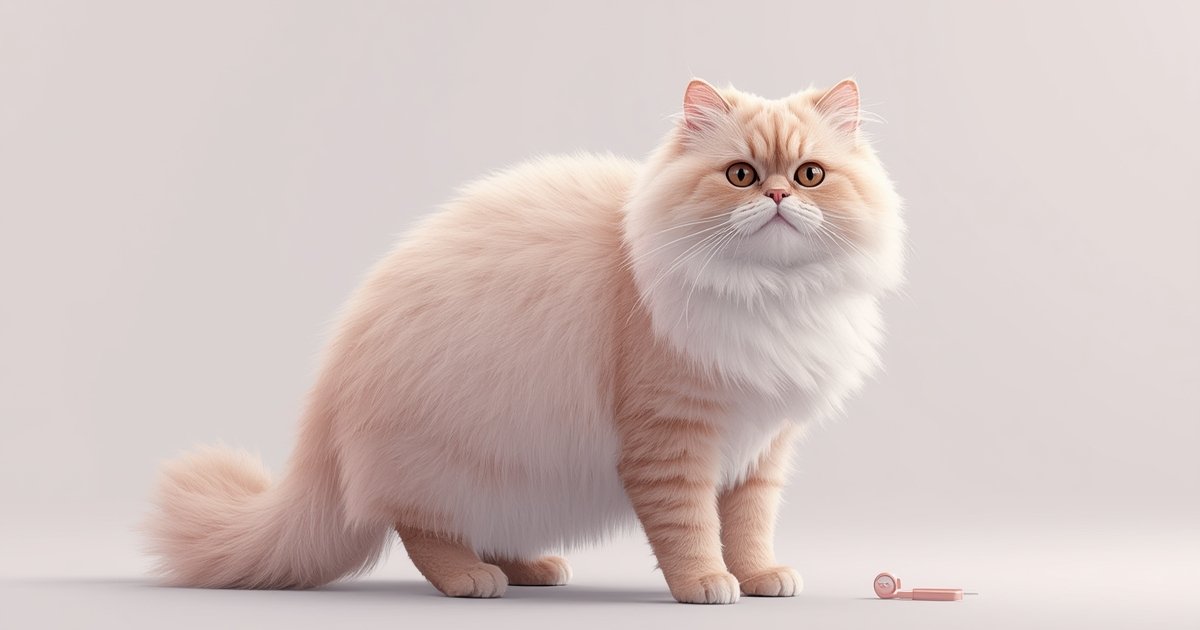
Master Persian grooming secrets for a flawless coat. Dive into 2026 techniques, essential tools, and expert tips to keep your magnificent Persian looking stunning and healthy.
Persian cats are renowned for their stunning, luxurious coats, a hallmark of their elegance and charm. This magnificent fur, however, doesn’t maintain itself. Proper Persian grooming is an ongoing commitment, a labor of love that ensures your feline friend remains both beautiful and comfortable. As we look towards 2026, the principles of excellent cat care remain timeless, but advancements in tools and understanding continue to refine our approach to keeping that magnificent coat flawless.
Neglecting this crucial aspect of their care can lead to serious health issues, including painful matting, skin infections, and discomfort. A well-groomed Persian is a happy, healthy Persian, and understanding the specific needs of their unique coat is the first step towards achieving this.
The Unique Challenges of Persian Grooming
The Persian cat’s iconic long, flowing coat is undeniably beautiful, but it presents unique challenges that owners must be prepared to address. Unlike many other breeds, a Persian’s fur requires daily attention to prevent common issues that can quickly escalate.
Their double coat, consisting of a dense undercoat and a longer, silkier outer layer, is particularly prone to tangling and matting. This isn’t just a cosmetic problem; mats can pull on the skin, restrict movement, and hide parasites or skin infections. Effective Persian grooming starts with understanding these inherent challenges.
Understanding the Persian Coat Type
The beauty of a Persian cat’s coat lies in its sheer volume and texture. It’s a double coat, meaning it has two distinct layers. The undercoat is soft, dense, and serves to insulate the cat, while the guard hairs form the longer, flowing outer layer that gives the Persian its characteristic majestic appearance.
This combination, while stunning, is a magnet for loose hair, dirt, and debris. Without regular removal of dead hair from both layers, it quickly intertwines, forming knots and then solid mats that can be incredibly difficult and painful to remove.
Environmental factors also play a significant role. Indoor Persians still shed, and their fur can pick up household dust, litter particles, and food remnants. Outdoor Persians, though less common, face even greater challenges with burrs, twigs, and mud becoming embedded in their fur.
Common Grooming Pitfalls to Avoid
Many new Persian owners underestimate the dedication required for consistent grooming, leading to several common pitfalls. Avoiding these can save both you and your cat a lot of stress.
– **Skipping Daily Brushing:** This is perhaps the most significant error. A few days without brushing can turn a manageable coat into a matted nightmare. Daily brushing is non-negotiable for effective Persian grooming.
– **Using the Wrong Tools:** Not all brushes are created equal. Using brushes designed for short-haired cats or human hair can be ineffective at penetrating the thick Persian coat and can even damage the fur or irritate the skin.
– **Inconsistent Bathing Schedule:** While daily brushing is paramount, periodic bathing is also necessary. Infrequent bathing can lead to oily buildup, dull fur, and a greater propensity for matting.
– **Forgetting Sensitive Areas:** The areas behind the ears, armpits, and around the sanitary regions are particularly prone to matting and often overlooked during routine brushing.
– **Ignoring Tear Stains:** Persians are known for their brachycephalic (flat) faces, which can lead to excessive tearing and tear stains. Neglecting these can cause skin irritation and bacterial growth.
Essential Tools for Flawless Persian Grooming
Having the right arsenal of grooming tools is fundamental to successful Persian grooming. Investing in high-quality equipment designed specifically for long-haired cats will make the process much more efficient and comfortable for your pet.
Think of it as setting up a professional salon for your cherished feline. Each tool serves a specific purpose, contributing to a holistic approach to maintaining your Persian’s magnificent coat and overall hygiene.
A Guide to Brushes and Combs
The cornerstone of any Persian grooming kit is a selection of appropriate brushes and combs. These are your primary weapons against mats and tangles.
– **Pin Brush:** Ideal for general detangling and fluffing the coat. Look for one with rounded pins to prevent scratching your cat’s skin. It’s great for the topcoat.
– **Slicker Brush:** Features fine, short wires packed closely together. Excellent for removing loose undercoat hair and smaller tangles. Use with a light hand to avoid skin irritation.
– **Metal Comb (Wide-toothed and Fine-toothed):** An essential tool for detailed work. The wide-toothed section helps work through larger tangles, while the fine-toothed side is perfect for checking for any missed knots and for delicate areas like the face and paws. A good quality steel comb is indispensable for effective Persian grooming.
– **Dematter Tool/Mat Splitter:** For serious mats, these tools can help break them up safely. Use with extreme caution and always follow the fur growth, never cutting towards the skin.
Bathing Supplies and Techniques
Bathing a Persian cat can be a daunting task, but with the right supplies and a calm approach, it becomes a manageable part of their routine. Aim for a bath every 4-6 weeks, or more frequently if your cat gets particularly dirty.
– **Cat-Specific Shampoo and Conditioner:** Never use human products, as they can irritate your cat’s skin and strip essential oils. Choose tearless, moisturizing, and conditioning formulas designed for long-haired cats. Some specialized shampoos target dander or extra oiliness.
– **Tear Stain Remover:** For the delicate eye area, a gentle, cat-safe tear stain remover helps keep the fur around the eyes clean and free from discoloration.
– **Absorbent Towels and Pet Dryer:** You’ll need several towels to blot excess water. A dedicated pet dryer (set to a cool or low-heat setting) with a stand can greatly speed up the drying process and help prevent mats from forming as the fur dries.
– **Cotton Balls/Pads:** Useful for applying tear stain remover and for gently cleaning ears.
Essential Grooming Tools for Persian Cats
To give you a clearer idea of what to look for, here’s a comparison of some top-rated grooming tools that are highly recommended for Persian grooming.
| Product | Price | Pros | Cons | Best For |
|---|---|---|---|---|
| Hertzko Self-Cleaning Slicker Brush | $15-$25 | Retractable bristles for easy cleaning, effective for removing loose undercoat. | Can be too harsh if used incorrectly; watch for skin sensitivity. | Daily undercoat removal and detangling small knots. |
| Chris Christensen Original Series Pin Brush | $30-$50 | High-quality pins glide through the coat, ergonomic handle, very durable. | Higher price point compared to generic pin brushes. | General detangling, fluffing, and preparing the coat for combing. |
| SAFARI Long-Hair Cat Comb | $8-$15 | Combination of wide and fine teeth, sturdy metal construction. | Not ideal for initial heavy detangling of matted fur. | Finishing, checking for missed tangles, and delicate areas. |
| Pet Grooming Dryer (e.g., Flying One) | $70-$150 | Powerful airflow, multiple heat settings, speeds up drying significantly, helps prevent mats. | Can be noisy; requires acclimatizing your cat to the sound. | Thorough drying after baths, blowing out loose undercoat. |
| TropiClean OxyMed Medicated Shampoo | $15-$20 | Effective for skin irritations, soothing, pleasant scent. | Stronger formula, might not be needed for every bath. | Cats prone to skin issues, general deep cleaning baths. |
The Step-by-Step Persian Grooming Routine
Establishing a consistent, step-by-step grooming routine is the secret to a well-maintained Persian coat. This isn’t just about appearance; it’s about comfort and preventing health issues. Regularity is key, building trust and making the process less stressful for both of you.
Think of it as a bonding ritual. A calm, patient approach will yield far better results than a hurried, forced one. Your Persian will quickly learn to anticipate and even enjoy their grooming sessions.
Daily Brushing: The Foundation of Persian Grooming
Daily brushing is the single most important aspect of Persian grooming. It takes only 10-15 minutes but makes an enormous difference in preventing mats and keeping the coat healthy.
1. **Gather Your Tools:** Have your pin brush, slicker brush, and metal comb ready.
2. **Find a Calm Environment:** Choose a quiet spot where your cat feels secure, perhaps on a grooming table or a towel-covered surface.
3. **Start Gently:** Begin by using the pin brush over the entire body, working in the direction of hair growth. This helps to loosen dead hair and surface tangles. Focus on being gentle to avoid pulling.
4. **Line Brushing Technique:** For deeper detangling, especially of the undercoat, use the line brushing method. Part the fur in small sections and brush from the skin outwards, holding the hair above the section being brushed. This ensures you’re reaching all the way to the roots. Follow with a slicker brush on these sections.
5. **Focus on Mat-Prone Areas:** Pay extra attention to the chest, armpits, behind the ears, the “britches” (back of the hind legs), and the tail. These areas are notorious for matting. Use your metal comb to gently work through any small knots you encounter.
6. **Check with a Comb:** After brushing, run a fine-toothed metal comb through the coat to ensure there are no hidden tangles. If the comb snags, go back and re-brush that section.
7. **Reward and Praise:** Always end the session with praise, petting, and a small treat to create positive associations with grooming.
Bathing Your Persian: A Stress-Free Approach
Bathing should be a scheduled event, typically every 4-6 weeks. Proper preparation and technique can make it much less stressful for your cat.
1. **Pre-Bath Brushing:** Thoroughly brush your cat before the bath to remove any existing mats or tangles. Water will only tighten them, making them impossible to remove.
2. **Prepare the Bathing Area:** Use a non-slip mat in the tub or sink. Have all your shampoos, conditioners, towels, and a cup or spray hose within easy reach. The water should be lukewarm, not hot or cold.
3. **Wet Thoroughly:** Gently wet your cat’s fur, avoiding the face. A spray hose is often better than filling the tub, as it provides more control. Ensure the water penetrates all the way to the skin.
4. **Shampoo and Lather:** Apply cat-specific shampoo, starting from the neck and working your way down, including legs, belly, and tail. Lather gently, massaging the shampoo into the coat. Never rub vigorously, as this can create tangles.
5. **Rinse, Rinse, Rinse:** This is crucial. Rinse until all traces of shampoo are gone, as residue can irritate the skin and make the coat greasy or dull. This often requires multiple rinsing cycles.
6. **Condition (Optional but Recommended):** Apply a cat-specific conditioner, let it sit for a few minutes as directed, then rinse thoroughly. Conditioner helps prevent tangles and adds shine.
7. **Towel Dry:** Gently squeeze excess water from the coat, then wrap your cat in a clean, absorbent towel. Blot, don’t rub, to avoid tangling the fur.
8. **Blow Dry:** Use a pet dryer on a cool or low-heat setting. Keep the dryer moving constantly to prevent hot spots. Brush the fur gently as you dry, section by section, to prevent mats from forming as the coat dries. Ensure your cat is completely dry, especially the undercoat, to prevent skin issues.
Eye, Ear, and Nail Care
Beyond the coat, other aspects of hygiene are critical for your Persian’s well-being.
– **Eye Care:** Due to their facial structure, Persians often have tear stains. Gently wipe the area around their eyes daily with a damp, soft cloth or a specialized tear stain remover pad. Be extremely careful not to touch the eye itself. Regular cleaning prevents unsightly stains and potential irritation.
– **Ear Cleaning:** Check your cat’s ears weekly for dirt, wax buildup, or any signs of infection (redness, odor, excessive scratching). Use a veterinarian-approved ear cleaner on a cotton ball to gently wipe the visible parts of the ear. Never insert anything into the ear canal.
– **Nail Clipping:** Trim your Persian’s nails every 2-4 weeks. Use sharp, cat-specific nail clippers. Only snip the very tip of the nail, avoiding the quick (the pink part that contains blood vessels and nerves). If you’re unsure, ask your vet or a professional groomer for a demonstration. This is an integral part of comprehensive Persian grooming.
Advanced Persian Grooming Techniques and Tips
Once you’ve mastered the basics, you can delve into more advanced techniques and considerations that contribute to a truly flawless coat and a happy, healthy Persian. These tips often address specific challenges or optimize your efforts.
Integrating these advanced practices into your regular Persian grooming routine will elevate your cat’s comfort and appearance to the next level.
Dealing with Mats and Tangles
Despite daily brushing, the occasional mat can still appear. The key is to address them immediately before they become severe.
– **Prevention First:** The best way to deal with mats is to prevent them. Consistent daily brushing with the right tools is your strongest defense.
– **Gentle Detangling:** For small tangles, apply a small amount of cat-safe detangling spray or cornstarch to the knot. Gently work it apart with your fingers, then use a wide-toothed metal comb, starting from the ends of the hair and working your way towards the skin.
– **Using a Dematter Tool:** If the tangle is larger, a dematter tool can help split the mat into smaller, more manageable sections. Always comb through the split sections to completely remove the tangle.
– **Scissors as a Last Resort:** For very tight mats close to the skin, carefully use blunt-nosed grooming scissors. Slide a metal comb between the mat and the skin to act as a barrier, then snip the mat along its length, never across. This breaks it into smaller pieces that can be brushed out. **Exercise extreme caution; it’s incredibly easy to cut skin.** If unsure, always consult a professional groomer or veterinarian.
– **Professional Help:** Don’t hesitate to seek professional help for severe matting. Attempting to remove large, tight mats yourself can be painful for your cat and may lead to injury or skin damage.
Nutrition’s Role in Coat Health
What goes into your Persian directly impacts the quality and health of their coat. A luxurious coat starts from within.
– **High-Quality Diet:** Feed a premium cat food rich in animal protein and essential nutrients. Avoid foods with excessive fillers or by-products.
– **Omega Fatty Acids:** Look for foods or supplements that contain Omega-3 and Omega-6 fatty acids (e.g., from fish oil or flaxseed). These are crucial for skin health and promoting a shiny, healthy coat. They can significantly enhance the effectiveness of your Persian grooming efforts.
– **Hydration:** Ensure your cat has constant access to fresh, clean water. Good hydration is vital for skin elasticity and coat luster. Consider a pet water fountain to encourage drinking.
– **Supplements:** Consult your veterinarian about specific supplements if your cat has a dull coat, dry skin, or excessive shedding. Biotin and B vitamins can also support coat health.
Professional Grooming vs. DIY
While DIY Persian grooming is essential, there are times when professional help is invaluable, or even necessary.
– **When to Consider a Professional:**
– **Severe Matting:** If your cat has extensive matting that you cannot safely remove, a professional groomer can often shave them down without causing trauma.
– **Initial Setup:** A professional can provide an initial “shave down” or “lion cut” to get your cat’s coat to a manageable length, especially if you’ve rescued a neglected Persian.
– **Regular Maintenance:** Even if you groom daily, periodic professional grooming (e.g., every 2-3 months) can help maintain coat health, especially for difficult areas or thorough bathing and drying.
– **Benefits of Professional Visits:**
– **Expert Handling:** Professionals are skilled at handling cats, especially those resistant to grooming.
– **Specialized Equipment:** They have powerful dryers, specialized clippers, and bathing systems that most home groomers don’t.
– **Learning from Professionals:** Many groomers are happy to share tips and demonstrate techniques. You can learn a lot by observing how they handle your cat and their coat.
Maintaining Health and Hygiene Beyond the Coat
Persian grooming extends beyond just the fur. A holistic approach to your cat’s health ensures that their magnificent coat is just one aspect of their overall well-being. Focusing on these broader areas creates a healthier, happier feline companion.
These elements are interconnected; a healthy internal system reflects externally, often through a vibrant coat and bright eyes. Neglecting internal health can undermine even the most diligent grooming efforts.
Dental Care for Persian Cats
Dental health is often overlooked but is crucial for your cat’s overall health, including their coat. Poor dental hygiene can lead to pain, infection, and even systemic diseases.
– **Daily Brushing:** Ideally, brush your cat’s teeth daily using a cat-specific toothbrush and enzymatic toothpaste. Start gradually to get your cat accustomed to the process. This is the most effective way to prevent plaque and tartar buildup.
– **Dental Treats and Toys:** While not a substitute for brushing, dental treats and toys can help reduce plaque and tartar through mechanical abrasion. Look for products approved by the Veterinary Oral Health Council (VOHC).
– **Regular Veterinary Check-ups:** Your veterinarian will assess your cat’s dental health during annual check-ups. They can recommend professional dental cleanings if necessary, which involve scaling and polishing under anesthesia.
– **Water Additives:** Some veterinarians recommend water additives that help reduce bacteria in the mouth. Always consult your vet before adding any supplements or products to your cat’s routine.
Environmental Enrichment and Stress Reduction
A cat’s environment and stress levels can significantly impact their skin and coat quality. A stressed cat may over-groom, leading to bald patches, or neglect grooming, resulting in matting.
– **Mental and Physical Stimulation:** Provide plenty of toys, scratching posts, and opportunities for play. A bored cat can develop stress-related behaviors that affect their grooming habits.
– **Safe and Secure Spaces:** Ensure your Persian has high perches, hiding spots, and comfortable resting areas where they feel safe and undisturbed. A predictable routine can also reduce anxiety.
– **Grooming as Bonding Time:** Transform grooming sessions into positive bonding experiences. Gentle handling, soft praise, and treats can make grooming a pleasurable routine, reducing stress for both of you. Consistent and positive Persian grooming experiences foster a stronger bond.
– **Clean Living Environment:** A clean home helps keep your cat’s coat clean. Regularly vacuuming, dusting, and cleaning litter boxes will reduce the amount of dirt and debris that can get trapped in their fur.
The journey to a flawless Persian coat is a rewarding one, requiring dedication, the right tools, and a deep understanding of your cat’s unique needs. From daily brushing to regular bathing and attention to details like eye and ear care, every step contributes to their beauty and well-being. Remember that proper Persian grooming is more than just aesthetics; it’s a vital part of preventative health care, helping to identify potential skin issues, infections, or parasites early on. Embracing this commitment ensures your magnificent Persian not only looks stunning but also lives a comfortable, healthy, and happy life, strengthening the bond you share.
Want to share your ultimate Persian grooming secret? Join the conversation on our social media channels or explore more articles in our Care & Grooming section for insights into other feline needs. For personalized advice or to schedule a consultation, please don’t hesitate to reach out to us at support@daxai.com!
Frequently Asked Questions (FAQ)
How often should I brush my Persian cat?
Persian cats should be brushed daily, without exception. Their long, double coats are highly prone to matting, and even a day or two of missed brushing can lead to painful tangles. Daily brushing prevents mats, removes loose hair, and distributes natural oils, keeping their coat healthy and shiny.
What kind of shampoo should I use for my Persian cat?
Always use a cat-specific shampoo and conditioner, preferably one formulated for long-haired breeds. Human shampoos can be too harsh and strip essential oils from your cat’s skin and coat, leading to dryness or irritation. Look for tearless, moisturizing, and conditioning formulas.
How do I prevent tear stains on my Persian cat?
Tear stains are common in Persians due to their flat faces. Regular cleaning is key. Gently wipe the area around their eyes daily with a soft, damp cloth or a specialized pet tear stain remover. Keeping the fur trimmed short around the eyes can also help, but be extremely careful. Consult your vet if staining is excessive or seems accompanied by irritation.
When should I take my Persian cat to a professional groomer?
While daily home grooming is essential, professional grooming is recommended every 2-3 months, or as needed. Professionals can handle severe matting, provide thorough deep cleaning and drying, and offer specialized cuts like a “lion cut” which can make home maintenance easier. They also have tools and expertise for difficult tasks.
Can diet really affect my Persian’s coat quality?
Absolutely. A high-quality diet rich in animal protein and essential fatty acids (like Omega-3s and Omega-6s) is crucial for a healthy, lustrous coat and skin. Poor nutrition can lead to a dull, dry, or excessively shedding coat, making Persian grooming more challenging. Always choose premium cat food and consider vet-approved supplements if necessary.
Leave a Reply