

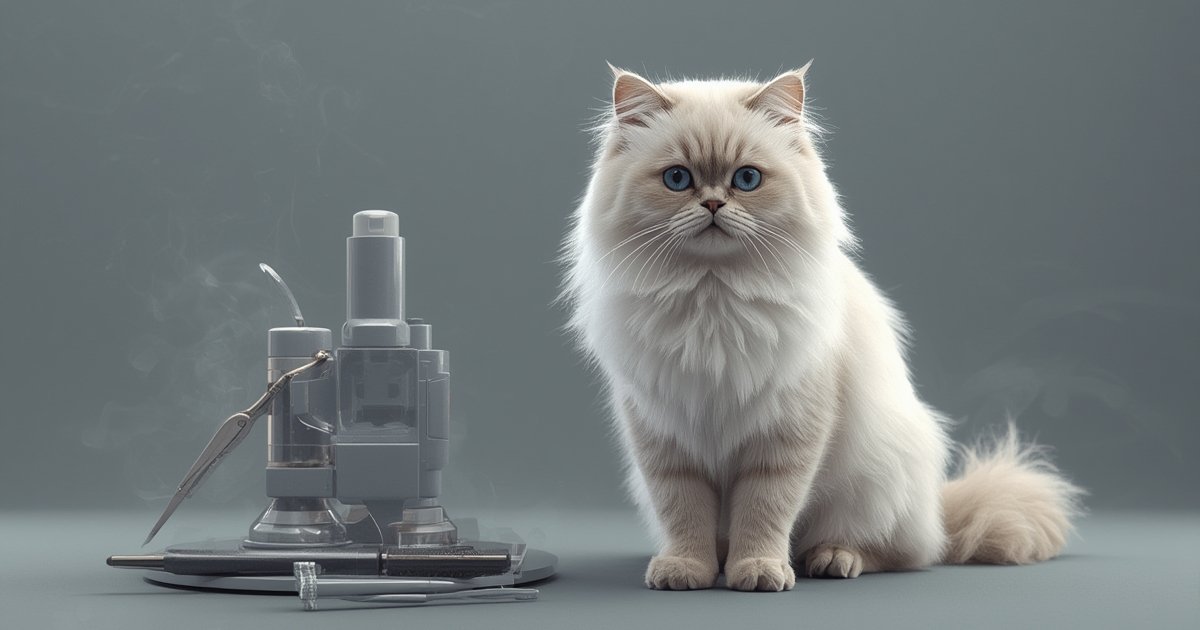
Essential tips for Persian grooming: brushing, bathing, eye care, and more. Keep your Persian’s luxurious coat pristine with this ultimate guide!
Understanding the Unique Needs of Persian Grooming
The majestic Persian cat, with its distinctive flat face and luxurious flowing coat, is a sight to behold. This magnificent beauty, however, comes with a unique set of care requirements, particularly when it comes to their fur. Regular and diligent Persian grooming isn’t just about aesthetics; it’s crucial for their health and comfort.
Persians possess a long, dense double coat, meaning they have both a soft undercoat and longer guard hairs. This combination, while beautiful, is highly prone to tangling and matting. Without proper care, these mats can become tight and pull on their skin, causing discomfort, skin infections, and even restricting movement. Understanding these unique needs is the first step in ensuring your Persian’s coat remains healthy and pristine.
A well-maintained coat prevents issues like hairballs, which can lead to digestive problems. Starting a consistent Persian grooming routine from kittenhood is vital, allowing your cat to become accustomed to the process and making it a positive bonding experience rather than a stressful one. This foundational understanding sets the stage for a lifetime of happy and healthy grooming sessions.
The Essential Tool Kit for Persian Grooming Success
Successful Persian grooming hinges on having the right tools for the job. Investing in high-quality grooming equipment will make the process easier, more effective, and more comfortable for your cat. Don’t underestimate the impact of a good brush or a specialized comb when dealing with their voluminous fur.
A basic kit should include several types of brushes and combs, along with other essential items. Each tool serves a specific purpose in maintaining your Persian’s coat, from detangling to de-shedding and preventing mats. Knowing which tool to use and when is key to a successful Persian grooming regimen.
Comparison of Top Grooming Brushes for Persians
| Product | Price | Pros | Cons | Best For |
|---|---|---|---|---|
| Pin Brush (e.g., Chris Christensen Oval Pin Brush) | $30-$50 | Excellent for general detangling and fluffing. Pins are gentle on the skin. | May not remove all dead undercoat effectively on its own. | Daily brushing, general coat maintenance, separating hairs. |
| Metal Comb (e.g., Andis Steel Pet Comb) | $10-$25 | Indispensable for identifying and working out small tangles and mats. Comes in fine and wide-tooth sections. | Can pull hair if used carelessly; not suitable for entire coat. | Targeted detangling, checking for hidden mats, finishing touches. |
| Slicker Brush (e.g., Hertzko Self-Cleaning Slicker Brush) | $15-$35 | Great for removing loose hair, especially the dense undercoat. Helps prevent matting and reduces shedding. | Wire bristles can be harsh if pressed too hard; not for daily use for all cats. | De-shedding, removing loose undercoat, occasional use on matted areas. |
| De-matting Comb/Rake (e.g., FURminator De-matting Tool) | $20-$40 | Specifically designed blades to safely cut through small mats without damaging the surrounding fur. | Requires careful handling to avoid cutting the skin; not for general brushing. | Tackling stubborn small mats that can’t be brushed out. |
Beyond brushes and combs, consider these essentials for comprehensive Persian grooming:
– Blunt-tip scissors: For carefully trimming small, stubborn mats that cannot be combed out, or for tidying up around the face or paws. Always use extreme caution.
– Nail clippers: Choose a scissor-style or guillotine-style clipper suitable for cats.
– Pet-specific shampoo and conditioner: Formulated for long-haired cats, often tear-free and moisturizing.
– Tear stain remover: Persians are prone to tear staining; gentle, pet-safe products can help manage this.
– Cotton balls or pads: For cleaning eyes and ears.
– Pet dryer: A low-heat, quiet pet dryer can speed up drying time after baths, preventing chills and matting.
Mastering the Art of Daily Brushing for Your Persian
The cornerstone of effective Persian grooming is a consistent daily brushing routine. This daily commitment is non-negotiable for preventing mats, reducing shedding, and maintaining the overall health and luster of your cat’s magnificent coat. Think of it as a small daily investment for a big payoff in their well-being.
Start with short, gentle sessions when your Persian is a kitten, gradually increasing the duration as they become more comfortable. Positive reinforcement, such as treats and praise, is crucial for associating grooming with a pleasant experience. This approach will make future Persian grooming sessions much more manageable and enjoyable for both of you.
Step-by-Step Daily Brushing Technique
1. Prepare Your Space and Your Cat:
– Find a quiet, comfortable area where you and your cat can relax. A stable surface, like a table with a non-slip mat, works well.
– Ensure all your tools are within easy reach.
– Gently talk to your cat, offering reassurance and perhaps a small treat to start.
2. Gentle Detangling with a Pin Brush:
– Begin by gently working through the coat with a pin brush. Start from the head and work your way down to the tail, paying special attention to areas prone to matting: behind the ears, armpits, flanks, and the “britches” (fur around the hind legs).
– Use a “line brushing” technique: part the fur and brush small sections at a time, working your way from the skin outwards. This ensures you’re not just brushing the top layer of fur.
– Be very gentle with any tangles you encounter. Never pull harshly.
3. Addressing Tangles and Mats with a Metal Comb:
– Once the pin brush has gone through smoothly, follow up with a wide-tooth metal comb. This is your primary tool for finding and carefully working out any remaining tangles or small mats.
– Hold the fur at the base of the tangle with one hand to prevent pulling on the skin, and gently tease apart the knot with the comb, working from the outer edge inwards.
– For more stubborn mats, a de-matting comb or blunt-tip scissors may be necessary. If using scissors, always point the tip away from the skin and cut *into* the mat, rather than across it, to break it up.
4. Removing Loose Undercoat with a Slicker Brush:
– On occasion, especially during shedding seasons, use a slicker brush to remove loose undercoat. This helps prevent future mats and reduces the amount of hair your cat ingests.
– Use light, short strokes, again ensuring you’re not digging into the skin.
5. Finishing Touches:
– Finish with a final brush-through to fluff and smooth the coat.
– Offer praise and a reward, reinforcing the positive experience.
Consistency is key. Even 10-15 minutes of daily attention can make a world of difference in preventing severe matting and keeping your Persian’s coat in top condition. This active involvement in their Persian grooming routine strengthens your bond and contributes significantly to their overall health.
Bathing Your Persian Cat: A Step-by-Step Guide
While daily brushing is paramount, bathing is an equally crucial component of comprehensive Persian grooming. Due to their long, dense coats, Persians often require regular baths to keep their fur clean, free of oils, and prevent severe matting. The frequency can vary, but generally, a bath every 4-6 weeks is recommended, or more often if your cat gets particularly dirty.
Bathing a Persian can seem daunting, but with proper preparation and technique, it can be a smooth process. Patience and a calm demeanor are your best allies. Remember, the goal is to make it as stress-free as possible for your feline friend, reinforcing a positive association with their Persian grooming routine.
Preparing for the Bath
1. Pre-Brush Thoroughly:
– Never bathe a matted cat. Water will only tighten mats, making them impossible to remove.
– Before anything, dedicate time to a thorough brushing session, removing all tangles and mats. This is a non-negotiable step.
2. Gather All Supplies:
– Pet-specific shampoo and conditioner (for long-haired cats).
– Several towels (one for immediate drying, others for later).
– A non-slip mat for the tub or sink.
– A pitcher or cup for rinsing.
– Cotton balls (for ears) and ophthalmic ointment (to protect eyes, optional).
– Treats for positive reinforcement.
3. Create a Calm Environment:
– Close bathroom doors to prevent escape.
– Ensure the water temperature is lukewarm – not hot, not cold.
– Speak in a soothing voice throughout the process.
The Bathing Process
1. Wetting the Coat:
– Gently place your cat in the tub or sink on the non-slip mat.
– Using a hand-held shower sprayer or pitcher, slowly wet your cat’s coat, working from the neck down to the tail. Be careful to avoid getting water in their ears or eyes.
– Ensure the entire coat is thoroughly saturated down to the skin.
2. Shampooing:
– Apply a small amount of pet-specific shampoo, working it into a lather.
– Gently massage the shampoo into the coat, ensuring it penetrates all the way to the skin. Pay attention to often-dirty areas like paws and the underside.
– Avoid harsh scrubbing, which can tangle the fur.
3. Rinsing Thoroughly:
– This is perhaps the most critical step in Persian grooming baths. Any shampoo residue left behind can irritate the skin and lead to matting.
– Rinse repeatedly with clean, lukewarm water until the water runs clear and you can feel no residue on the fur.
– Start from the head and work downwards, tilting your cat’s head slightly to prevent water from running into their face.
4. Conditioning (Optional but Recommended):
– For long-haired breeds like Persians, a pet-specific conditioner can help moisturize the skin and make the coat softer and easier to comb.
– Apply conditioner, let it sit for the recommended time, then rinse even more meticulously than with shampoo.
Drying Your Persian
1. Towel Drying:
– Immediately after rinsing, gently wrap your cat in a soft towel.
– Blot and squeeze the excess water from the fur. Do not rub vigorously, as this can cause tangles.
– Use a second dry towel if necessary.
2. Blow Drying:
– Many Persians tolerate blow drying, which is essential to prevent matting and chills. Use a pet-specific dryer on a low-heat, low-speed setting, or a human dryer on the coolest setting.
– Keep the dryer moving constantly, never focusing on one spot for too long to avoid overheating.
– Brush the coat gently as you dry, continuing to part sections to ensure the undercoat is also drying. This also helps prevent tangles.
– Ensure your cat is completely dry, especially the dense undercoat, before letting them roam freely. Damp fur is an invitation for mats.
3. Post-Bath Brushing:
– Once completely dry, give your Persian a final, thorough brushing to ensure all fur is smooth and tangle-free. This final step is vital to complete the successful Persian grooming bath.
Beyond the Brush: Eye, Ear, and Nail Care for Persians
While brushing and bathing form the foundation of Persian grooming, comprehensive care extends to several other vital areas. Paying attention to your cat’s eyes, ears, and nails can prevent common health issues and ensure their overall comfort and well-being. These aspects of Persian grooming require a gentle touch and regular inspection.
Eye Care: Managing Tear Stains
Persian cats are known for their brachycephalic (flat) faces, which can lead to increased tearing and tear staining. The folds around their eyes and their often-oversized tear ducts contribute to this. Untreated tear stains can become a breeding ground for yeast and bacteria, leading to skin irritation and infections.
– Daily Cleaning: Gently wipe around your cat’s eyes daily with a soft, damp cloth or a cotton ball soaked in warm water. Always use a fresh cloth/cotton ball for each eye to prevent cross-contamination.
– Specialized Cleaners: For stubborn stains, use a veterinarian-approved tear stain remover specifically designed for cats. Follow the product instructions carefully.
– Trimming: Carefully trim any long hairs around the eyes that might wick tears into the fur. Use blunt-tip scissors and always point them away from the eye.
– Monitoring: Watch for excessive tearing, redness, swelling, or discharge, which could indicate an eye infection or other underlying health issue. Consult your vet if you notice these signs.
Ear Care: Keeping Them Clean and Healthy
Regular ear checks are an important part of routine Persian grooming. While Persians generally have healthy ears, their long hair can sometimes cover the ear canal, potentially trapping moisture and debris.
– Weekly Checks: Gently lift your cat’s ear flap and inspect the visible part of the ear canal. It should be clean and pale pink, with no strong odor, excessive wax, or redness.
– Gentle Cleaning: If you see a small amount of dirt or wax, use a cotton ball dampened with a veterinarian-approved ear cleaner. Gently wipe the visible parts of the ear.
– Do NOT insert cotton swabs (Q-tips) into the ear canal, as this can damage the eardrum or push debris further in.
– Seek Vet Attention: If you notice any signs of infection (redness, swelling, foul odor, dark discharge, excessive scratching, head shaking), consult your veterinarian immediately.
Nail Trimming: A Crucial Comfort and Safety Measure
Keeping your Persian’s nails trimmed is vital for their comfort and your furniture’s integrity. Overgrown nails can catch on things, break, or even grow into their paw pads, causing pain and infection. Regular nail trimming should be a routine part of your Persian grooming schedule.
– Frequency: Trim nails every 2-4 weeks, or as needed.
– Proper Tools: Use sharp, cat-specific nail clippers (scissor or guillotine style).
– Technique: Gently press on your cat’s paw pad to extend the nail. Identify the “quick,” which is the pink part inside the nail containing blood vessels and nerves. Only cut the white tip beyond the quick.
– Be Cautious: Cutting into the quick is painful and will cause bleeding. If this happens, apply styptic powder to stop the bleeding.
– Positive Reinforcement: Make nail trimming a positive experience with treats and praise. If your cat resists, try trimming only one or two nails at a time.
– Professional Help: If you’re uncomfortable trimming your cat’s nails, ask your vet or a professional groomer for assistance or a demonstration.
Common Grooming Challenges and Solutions for Persian Cats
Even with a diligent Persian grooming routine, you may encounter specific challenges. Understanding these common hurdles and knowing how to address them can save you stress and keep your Persian looking and feeling their best. Prevention is always better than cure, but knowing solutions is key.
Matting and Tangles
Despite daily brushing, mats can still form, especially in high-friction areas or if a brushing session is missed.
– Solution 1: Prevention is paramount. Consistent daily line brushing, focusing on prone areas like armpits, behind ears, and “britches,” will drastically reduce mat formation.
– Solution 2: For small tangles, use a metal comb to gently tease them out, holding the fur at the base to prevent pulling on the skin. Work from the outside of the tangle inwards.
– Solution 3: For stubborn small mats, a de-matting tool or blunt-tip scissors can be used cautiously. Always slide the scissors parallel to the skin and cut *into* the mat to break it up, never across it.
– Solution 4: Severe or extensive mats should be handled by a professional groomer or veterinarian. Attempting to cut out large mats yourself can be dangerous and cause injury to your cat’s delicate skin.
Hairballs
Persians naturally ingest a lot of fur due to their long coats, making them susceptible to hairballs.
– Solution 1: Increase brushing frequency during shedding seasons. The more hair you remove with a brush, the less hair your cat will ingest.
– Solution 2: Consider a diet formulated for hairball control. These diets often contain higher fiber to help hair pass through the digestive system.
– Solution 3: Use hairball remedies, such as special treats or oral gels, which can help lubricate the digestive tract and aid in hairball passage. Consult your vet before introducing new supplements.
Skin Issues: Dryness, Dandruff, or Irritation
Persians can sometimes develop dry skin, dandruff, or irritation, often linked to diet, bathing practices, or underlying health issues.
– Solution 1: Ensure your cat’s diet is high-quality and includes essential fatty acids (like Omega-3 and Omega-6), which promote skin and coat health.
– Solution 2: Use moisturizing, pet-specific shampoos and conditioners designed for long-haired cats. Avoid over-bathing, which can strip natural oils, but also ensure thorough rinsing to prevent residue.
– Solution 3: If dandruff persists or you notice redness, flaking, or excessive scratching, consult your veterinarian. These could be signs of allergies, parasites, or other dermatological conditions requiring medical attention.
Resistance to Grooming
Some cats are naturally more resistant to grooming, especially if they weren’t introduced to it early.
– Solution 1: Patience and positive reinforcement are key. Keep grooming sessions short, perhaps just a few minutes, several times a day.
– Solution 2: Use treats, praise, and gentle petting to reward calm behavior. Gradually increase the duration as your cat becomes more accepting.
– Solution 3: Consider having grooming done during their most relaxed times, such as after a meal or a play session.
– Solution 4: If resistance is severe, a professional groomer can often handle challenging cats safely and effectively, or your vet can offer advice on behavioral modification techniques. This is an important part of overall Persian grooming management.
Mastering the art of Persian grooming is a journey that builds a stronger bond between you and your feline companion. By understanding their unique needs, using the right tools, and approaching each task with patience and love, you can ensure your Persian cat’s coat remains purr-fectly pristine. Remember, a well-groomed cat is a happy and healthy cat, reflecting the dedicated care you provide.
Share your own Persian grooming tips in the comments below! If you have further questions or want to explore more topics on pet care, don’t hesitate to reach out to our team of experts. We’re here to help you provide the best life for your beloved feline companion.
Frequently Asked Questions (FAQ)
How often should I groom my Persian cat?
Daily brushing is essential for Persian cats to prevent mats and tangles. Baths are typically needed every 4-6 weeks, while eye and ear cleaning should be done daily or weekly, and nails trimmed every 2-4 weeks.
What’s the best brush for a Persian cat?
A combination of tools is best: a pin brush for daily detangling and fluffing, a wide-tooth metal comb for working out small tangles, and a slicker brush for removing loose undercoat. A de-matting comb can be useful for stubborn mats.
Can I use human shampoo on my Persian cat?
No, it’s not recommended. Human shampoos have a different pH balance than cat skin and can cause dryness, irritation, or other skin problems. Always use a high-quality shampoo specifically formulated for cats, ideally for long-haired breeds.
How do I deal with matted fur on my Persian?
For small, loose mats, gently tease them apart with a metal comb, working from the outer edge inward. For larger or tighter mats, it’s safest to use a de-matting tool cautiously or, even better, consult a professional groomer or veterinarian. Never try to cut out large mats with regular scissors, as this can easily injure your cat.
When should I take my Persian to a professional groomer?
Consider a professional groomer if your cat has extensive matting, is highly resistant to home grooming, or if you’re uncomfortable performing certain tasks like nail trimming or intricate mat removal. Professional groomers have specialized tools and expertise to handle challenging coats safely and effectively.
Leave a Reply